The 5 Lands Walk – Central Coast Aboriginal Dreamtime Story
This story is a fictional, respectful reimagining inspired by the spirit of the 5 Lands Walk Message and the cultural themes shared on Darkinjung Country. It is not a traditional Dreamtime story handed down by Elders, and it should not be mistaken for one. Traditional knowledge belongs to the Aboriginal peoples of the Central Coast — the Darkinjung, and their neighbours the Awabakal and Guringai — and is theirs alone to share.
What follows is a creative tribute, written with deep respect for the world’s oldest living culture.
Preface: The 5 Lands Walk Today
Each winter, just around the solstice when the humpback whales begin their long migration north, thousands of people lace up their walking shoes and gather at MacMasters Beach for one of the Central Coast’s most loved community events — the 5 Lands Walk. What started back in 2006 as a small local stroll inspired by Italy’s Cinque Terre has grown into a 10-kilometre celebration that draws more than 20,000 walkers across five coastal villages: MacMasters Beach, Copacabana, Avoca Beach, North Avoca and Terrigal. In 2026, the walk celebrates its 20th anniversary on Saturday 20 June.
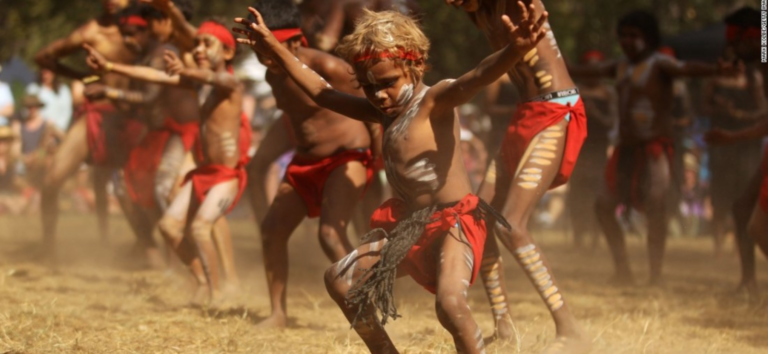
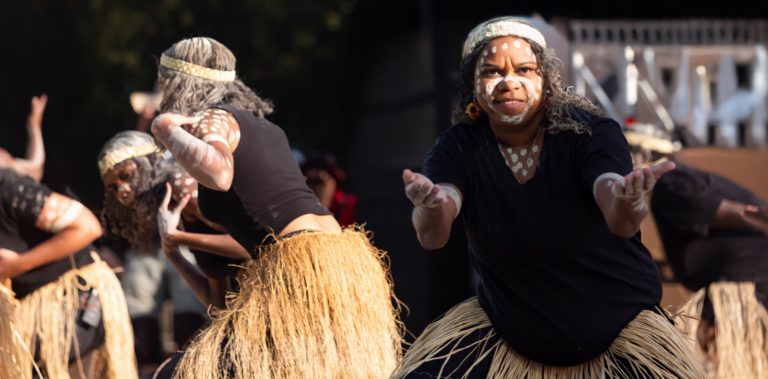
It’s not a race, and it’s not a fundraiser — it’s a free gift from the community to the community. You can walk the lot, or hop on a Busways shuttle between beaches if your knees aren’t what they used to be. Along the way, you’ll be Welcomed to Darkinjung Country, take part in a smoking ceremony, watch the K’gari Njun dance group, listen to the deep hum of the didgeridoo, browse art exhibitions, fly a kite at North Avoca, watch for whales from Captain Cook Lookout, and follow the Message Stick as it’s carried by an Aboriginal Youth Messenger from the first beach to the last.
The walk honours the deep, ongoing connection that the First Nations people of the Central Coast have to this country — a connection that stretches back tens of thousands of years through carved rock engravings, songlines, and stories of ancestral beings. To learn more about the broader concept that underpins these stories, you might like to read about The Dreaming on Wikipedia.
So with that in mind — pop the kettle on, settle in, and let me yarn you a story.
The Story of Yango and the Five Lands
The Stillness Before Dawn
Long, long ago — back when the land was still soft and learning its own shape — the coast we now call the Central Coast was a quiet, restless place. The cliffs hadn’t yet decided where to stand. The lagoons hadn’t pooled. The sand dunes drifted like clouds that had forgotten how to fly. And the people who walked the country were busy, always busy, hurrying from one place to the next, never stopping long enough to listen.
High above it all, on a great rounded shoulder of stone that watched over the sea, lived Yango — an ancestral spirit older than memory. Yango wasn’t a man, and Yango wasn’t an animal. Yango was something more like a feeling — the weight of stillness, the hush before rain, the warm patch of sunlight on a cold morning. The old people said Yango was the base of the country, the steady thing underneath everything that moved.
Yango watched the people rushing about and shook the great mountain of his head. Too fast, he thought. They’ve forgotten how to be.
So one dawn — that pure, soft dawn when the light is still deciding whether to come — Yango sent out a bird.
The Bird and the Word
The bird was a sea-eagle, broad of wing and sharp of eye, and it spiralled high above the coast. As it climbed, it called down to the people in their camps:
“Yaama, yaama!” — Hello, hello. “Pause your steps. Let haste subside.”
A young fella named Birrun was the first to hear it. He was a clever one but a hurried one — always off looking for the next fish, the next track, the next thing. He was halfway down a sand dune with his spear in his hand when the call drifted over him, and for the first time in a long while, he stopped.
“Strewth,” he muttered, looking up. “What’s that big bird on about?”
The eagle circled once more. “Tread softly, adore. The land has things to tell you, but only if you stop yabbering long enough to hear.”
Birrun frowned. He wasn’t sure he liked being told off by a bird. But there was something in the way the wind had gone quiet, and in the way the sea below him had smoothed itself out like a polished stone, that made him sit down on the warm sand and wait.
That’s when the rain began to speak.
The Rain Speaks to the Land
It wasn’t a heavy rain — just a soft, sideways mist, the kind that gets into your eyebrows and makes everything smell like eucalyptus and salt. As the rain fell, the land beneath Birrun’s feet began to change. The dunes settled themselves into gentle hills. A little creek wriggled out from under a rock and made its way down to the sea, giggling all the way. A lagoon — what we’d later call Cockrone — pooled itself quiet and dark behind the dunes, like a mirror laid down for the sky to admire itself in.
Birrun watched, gobsmacked. The country was making itself right in front of him, and all it had needed was for someone to sit still and pay attention.
A red-bellied black snake slid out from the spinifex, its scales glistening. It paused near Birrun’s foot — not threatening, just present — and gave a low hiss.
“Remember the old ways,” the snake said. “In them, you’ll find bliss. The light you seek and the dark you fear — they’re the same path, mate. Don’t be running from the shadows. They’ve got things to teach you too.”
Birrun nodded slowly. The snake slipped away into the scrub, and he understood, just a little, what Yango had been trying to say.
The Five Lands Take Shape
Now, Birrun wasn’t the only one who heard the eagle’s call that morning. All along the coast, other people had stopped what they were doing and looked up. And as they sat and listened, the land around each of them began to settle into its proper shape.
To the south, where the surf pounded loud and rhythmic against the headland, the country shaped itself into a place the old people called Tudibaring — where the waves pound like a beating heart. Today, we call it Copacabana. The pulse of the ocean there has never quietened, and if you stand on the headland and close your eyes, you can still feel the country’s heartbeat in the soles of your feet.
A bit further north, the land formed a wide, generous bay where the spirit of welcome lived — Bulbararing, the place we now call Avoca. The cliffs there opened their arms, and a freshwater lagoon nestled behind the beach as a place for yarning and resting. Strangers would meet there, exchange stories, and leave as friends. In learning, a sacred bond prevails, Yango whispered through the she-oaks.
North again, the country curled itself into a softer shape — North Avoca — a place chosen for ceremony, for weaving, for the careful slow work of making things by hand. The Mirring women would later sit there and weave baskets from the long grass, and the kites of the world would one day come to fly above its sands.
And at the very northern end, where a creek met the sea in a rush of laughter, the land made itself into Terrigal — the destination, the end-point, the resting place where journeys are completed and Message Sticks are received.
And at the start of it all, where the ground was firm and the breakfast fires would one day burn, MacMasters Beach — the meeting place, the first step.
Five lands. Five heartbeats. One country.
The Carved Stories on Ancient Rock
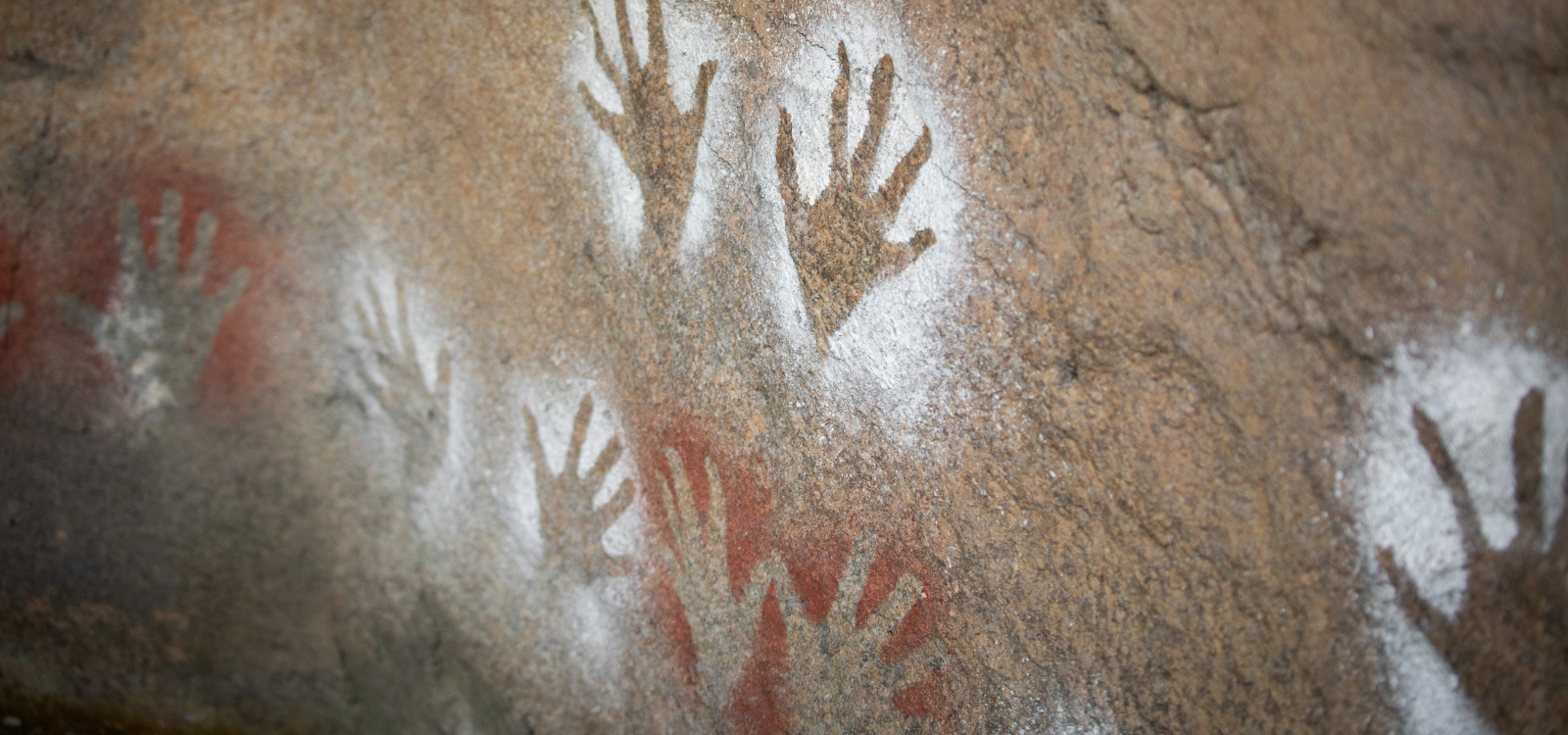
Yango was pleased, but he knew memory is a slippery thing. People forget. So he reached down with great stone fingers and pressed stories into the rock itself — carvings of whales and emus, of ancestor beings and travelling tracks, of fish and footprints. These engravings would last longer than any spoken word. Even today, scattered through the bush of Bouddi and Brisbane Water, you can find them — quiet sandstone galleries waiting patiently for anyone who walks softly enough to notice.
These engravings weren’t just pictures. They were instructions. They told the people which way to walk, which seasons to hunt, when the whales would pass by on their long road north, and how to live well with country. The neighbouring Awabakal people, just north around Buttaba(opens in new tab) and Lake Macquarie way, had their own carvings and their own stories — different songlines, but the same deep listening. The country was one big conversation, and every mob had a part to play.
The Didgeridoo and the Elder
Now, an old fella — an Elder named Wirrin — had been watching all this from his place by the fire. He picked up his yidaki, his didgeridoo, and began to play. The sound was deep and grounding, the kind of note that travels through your bones before it reaches your ears. It rolled across the dunes and out over the sea.
“This,” said Wirrin, “is the sound of the country thinking. When you hear it, you stop. You sit. You listen.”
Birrun sat and listened. So did the others, all up and down the coast. And in the silence between the notes, the creek spoke to them — soft and sure — of the wisdom carried in its gentle leaks. The land told them about transformation, about how every flood cleanses, every fire renews, every shifting moon asks you to face a different fear.
“You are the change you’ve been waiting to see,” Wirrin said, lowering the yidaki. “Prompted by darkness, in light, you’re free.”
The Lesson of Yango
The sun rose properly then, its rays piercing through the last of the rain like a warm hand on a cold cheek. Birrun stood up, dusted the sand off his legs, and looked out across the country he thought he’d known.
He hadn’t known it at all. Not really. Not until he’d stopped.
The eagle circled once more, calling its final message:
“Listen. Slow. Let peace be found. In being, not in doing, we trace our tracks. Walk with reverence under the sky’s embrace. With each heartbeat, find your place.”
And Yango, the great spirit-base of the country, settled deeper into the bones of the land — into the headlands, the lagoons, the carved rock and the rolling dunes — where he remains to this day, watching, waiting, holding everything steady while the rest of us rush about.
And So We Walk
That’s why, every winter, when the whales are passing and the air is cold and clean, the people of the Central Coast walk those five lands. Not because they have to. Because the country asks them to.
They walk softly. They listen for the eagle. They feel the heartbeat of Tudibaring under their feet. They yarn with strangers at Bulbararing. They sit in ceremony at North Avoca. They carry the Message Stick to Terrigal. And somewhere along the way, if they’re lucky and they’ve remembered to be still, they catch a glimpse of old Yango himself — not as a figure, but as a feeling. The feeling of belonging. The feeling of home.
In the dance of light and shadow, they find their way.
Yaama, yaama.