This Is How Coal Was Made – Awabakal Dreamtime Story
The Living Legacy of the Awabakal Coal Dreaming
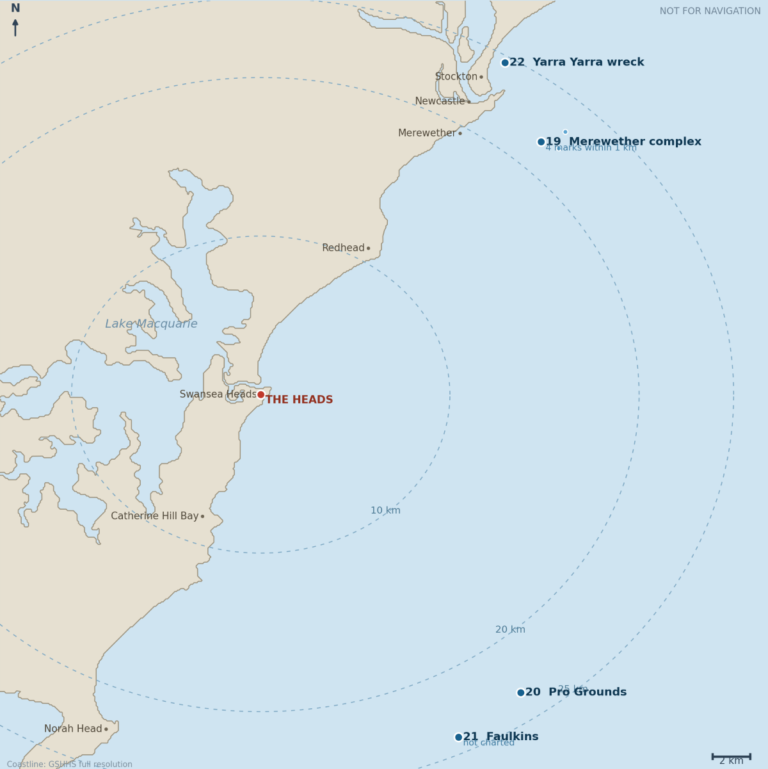
In the red sandstone cliffs of Redhead Bluff, where the Pacific Ocean meets the Central Coast of New South Wales, the ancient Awabakal Dreamtime Story is etched into the very earth itself. This place, known traditionally as Kintirrabin – “earth fire was here” – holds one of the most unique Dreamtime stories in all of Australia. Here, the Awabakal people of the Lake Macquarie region weave a narrative not found anywhere else in Aboriginal Australia: the story of how coal was created.
The Awabakal people have long understood that their country harbored deep secrets. For millennia, they lived in harmony with this land they called Nik-kin-ba – “the place of coal.” Unlike other Indigenous groups, they incorporated coal into their spiritual cosmology, recognizing both its practical uses and its profound spiritual significance. They used coal in their campfires, heated it to line their canoes, and understood its combustible properties long before European settlement.
Awabakal Dreamtime Story
Chapter 1: The Day the Sun Died
In the time before time, when the world was young and the Creator Spirit walked among the people, there existed a beautiful land where the Awabakal thrived. The sun rose each morning over Nik-kin-ba, warming the shores of the great saltwater lake and painting the sandstone cliffs in hues of gold and crimson. The people lived in harmony with the land, following the laws laid down by the Creator Spirit, their lives filled with hunting, gathering, ceremony, and song.
All this changed on the day the mountain sighed.
Old Wurumu, the custodian of the southern hunting grounds, was the first to notice. “The earth groans,” he told his grandchildren as they gathered honey from the banksia flowers. “Listen – like a great beast turning in its sleep.”
At first, the people paid little attention. The earth had spoken before – gentle rumbles that shook leaves from trees or sent small creatures scurrying. But this was different. Over the coming days, the groaning grew louder. Steam began to rise from cracks in the red earth near what we now call Redhead Bluff. Small animals fled the area, and the birds fell silent.
Then came the morning when the sun didn’t rise.
Or rather, it rose somewhere beyond a great blackness that erupted from the mountain. From a crack that had opened in the side of Kintirrabin, a darkness poured forth that was thicker than the deepest night. It wasn’t just an absence of light – it was a presence, a living shadow that swallowed the dawn and spread across the land like spilled ink.
Little Mirrin, only six summers old, cried out to her mother, “Mam, where has the sun gone? Did it fall into the water?”
“No, murrin,” her mother whispered, holding her close. “Something has covered its face.”
The darkness brought terror. Not just because it was dark – the Awabakal were not afraid of night – but because this darkness felt wrong. It smelled of sulfur and heat. It moved with purpose, creeping across the land, extinguishing campfires as it went. It wasn’t the gentle, star-studded blanket of night that allowed for dreaming and storytelling. This was a choking, oppressive shroud.
Chapter 2: The Gathering of the People
For three days and three nights, the darkness held sway. The people huddled in their shelters, their fires useless against the blackness. The air grew cold despite the strange heat that emanated from the mountain. Birds couldn’t fly in the unnatural darkness. Insects fell silent. Even the fish in the lake seemed to hide deeper than usual.
On the fourth day, the elders made a decision. They would send messengers – the fastest runners, those who knew every track and path even in darkness.
“Run to the four directions,” instructed Elder Birugan, her voice steady despite the fear they all felt. “Tell every clan, every family. We must gather at the place where the fresh water meets the salt. We must decide together how to bring back the light.”
And so the messengers ran. Garruwi ran north along the coast, his feet finding purchase on familiar rocks even when his eyes saw nothing. Warami ran south, following the songlines his father had taught him. Daran ran west toward the mountains, and Barang ran east toward the sunrise that no longer came.
They carried a simple message: “The darkness eats the sun. The people must gather. Bring what you can carry – rocks, branches, bark, hands to work. We must cover the hole that breathes darkness.”
They gathered at Wangi Point, where the peninsula stretches into the lake. For the first time in living memory, all the Awabakal clans came together – the coastal people who fished the ocean, the lake people who harvested shellfish, the forest people who hunted kangaroo and possum, the mountain people who knew the secret places where special stones could be found.
Elder Birugan stood before them, her white hair glowing with a strange luminescence that seemed to resist the darkness. “We have faced many challenges,” she began, her voice carrying across the hundreds gathered. “Floods and droughts, fires and storms. But this is different. This darkness comes from deep in the earth itself. It is the breath of the sleeping fire that has always lived beneath us.”
A young warrior named Gurang spoke up. “Can we not fight it? Drive it back with spears and fire?”
Old Wurumu shook his head. “You cannot spear smoke. You cannot burn shadow. This darkness is like water – it flows around obstacles. We must think differently.”
It was then that a child’s voice spoke – little Mirrin, who had crept close to listen. “When I spill water on the ground,” she said softly, “Mam tells me to cover it with sand so it doesn’t make mud. Can we cover the darkness?”
The elders looked at each other, then at the child. Elder Birugan’s eyes widened with understanding. “The child speaks wisdom. We cannot fight what comes from the earth… but we can work with the earth. We can cover the hole, bury the darkness, trap it beneath the ground.”
A plan began to form. They would bring earth and stone from all around. They would cover the gaping wound in the mountain. They would use the land itself to heal the land.
Chapter 3: The Burying of the Fire
The work began at first light – or what should have been first light. The people worked by the glow of bioluminescent fungi gathered from the rainforests, by the light of strange glowing stones the mountain people brought, and by memory and touch.
From the beaches came sand – basket after basket of white and golden sand carried in a human chain that stretched for miles. From the riverbeds came smooth stones, carried in nets slung between strong shoulders. From the forests came bark and branches, leaves and soil. From the cliffs came pieces of the red sandstone itself.
The hole in the mountain was a terrifying sight. It glowed with a faint red light deep within, like an angry eye peering from the earth. From it poured not just darkness but heat – a dry, burning heat that parched the throat and stung the eyes. And always, the darkness flowed forth, endless and hungry.
The people worked in shifts. While some slept, others worked. While some gathered materials, others placed them. They developed a rhythm, a song of labor that echoed across the darkened land:
“Bring the sand, bring the stone,
Cover the darkness, claim back the dawn.
Earth to earth, stone to stone,
Seal the fire, bring light home.”
For seven days and seven nights they worked. Children carried what they could. Elders directed where materials should go. The strongest men and women formed teams to roll the largest stones into place. They worked not as separate clans but as one people, united by a common purpose.
But as they worked, they noticed something troubling. The materials they placed over the hole were being consumed. The darkness didn’t just flow around them – it seemed to eat into them, to transform them. Sand turned black and glassy. Stones cracked with heat. Bark smoldered and turned to charcoal.
“The fire below is joining with the darkness,” observed Warami, one of the messengers. “They are becoming one thing – darkness that burns, fire that is black.”
Elder Birugan nodded grimly. “Then we must work faster. We must press them together so tightly they cannot escape, cannot spread. We must walk upon what we have placed, press it down with our weight, our footsteps, our determination.”
Chapter 4: The Dance of Containment
And so began the second phase of the work. Now, as materials were placed over the hole, people walked over them in careful patterns. At first, they walked alone or in pairs, but soon they developed a different approach.
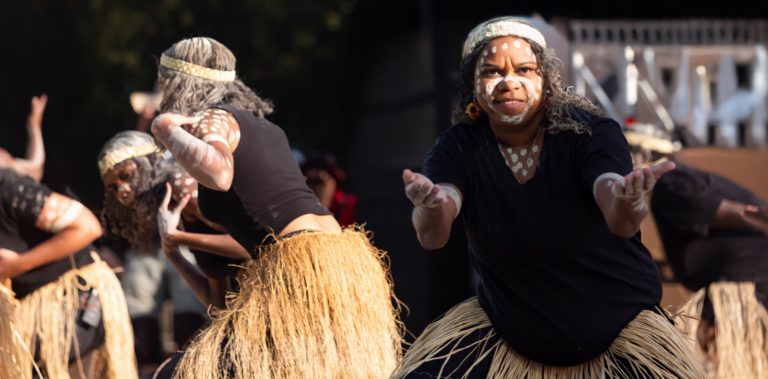
“Remember the ceremonies,” said Old Wurumu. “Remember how we dance to tell the stories of the Dreaming. We will dance upon the darkness.”
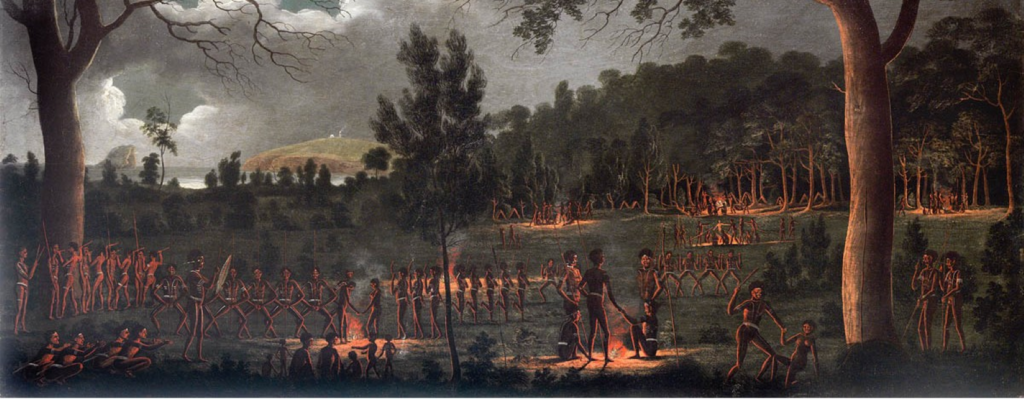
They formed lines, holding hands or linking arms. They danced in spirals that moved inward toward the center of the covered hole. They danced in lines that crisscrossed. They danced with purpose, their feet pressing down, down, down, pushing the darkness and fire together, compressing them beneath the weight of their collective movement.
The dance had its own song, one that rose and fell with the rhythm of their footsteps:
“Step together, press it down,
Darkness to the sleeping ground.
Fire meet the earth’s embrace,
Find your deep and hidden place.
Walk the circle, walk the line,
Make the black and burning mine.
Turn the terror, turn the fear,
Into something we hold dear.”
As they danced, something remarkable began to happen. The materials they had placed started to change more dramatically. The sand, stone, bark, and soil began to fuse together under the pressure of countless footsteps. They turned black and shiny, heavy and dense. The heat from below seemed to bake them, transform them.
Little Mirrin, dancing between her mother and father, looked down at her feet. “The ground is getting hard,” she said. “And shiny, like a black bird’s feather.”
The elders examined the transformed material. It was cool to the touch now, but heavy. When struck against stone, it made a sharp, ringing sound. When held up to what little light they had, it glinted dully.
“We have made something new,” Elder Birugan announced. “We have pressed the darkness and fire together until they became solid. We have made… nikkin.”
The word spread through the people. Nikkin. The black stone. The solidified darkness. The captured fire.
Chapter 5: The First Light Returns
They worked for a full cycle of the moon. Twenty-eight days of gathering, placing, dancing, pressing. Twenty-eight days of living in near darkness, working by whatever light they could find or create.
Then, on the twenty-ninth morning, as the people gathered for another day of work, a miracle occurred.
A thin line of gold appeared on the eastern horizon.
At first, no one noticed. They were too busy preparing for the day’s work. But little Mirrin, who had developed the habit of looking east every morning just in case, saw it first.
“Mam! Dad! Look!”
Heads turned. People stopped what they were doing. The line of gold grew wider, brighter. The oppressive darkness that had covered the land began to thin, to retreat back toward the mountain. It was as if the darkness was being drawn back to its source, sucked down into the hole they had covered.
As the sun rose fully for the first time in a moon cycle, cheers erupted across the land. People wept with joy. Children danced without pattern or purpose, just pure celebration. Elders embraced, their faces wet with tears.
The darkness was gone. Not completely – tendrils of it still seeped from cracks around the edges of their work, and the area around the mountain would always be darker than other places. But the sun shone again. The birds sang. Insects buzzed in the morning light.
The people gathered around the transformed mountain. Where once there had been a gaping hole, now there was a mound of black, shiny stone. It was beautiful in its own way – not the beauty of flowers or sunlight on water, but the beauty of something dangerous made safe, of chaos brought to order.
“This is our promise to the future,” Elder Birugan told the gathered people. “We have not destroyed the darkness or the fire. We have contained them. We have transformed them. This nikkin will remain here as a reminder of what we can accomplish when we work together.”
Chapter 6: The Legacy in the Land
Generations passed. The people continued to live in Nik-kin-ba, the place of coal. They told the story of the great darkness and how their ancestors had contained it. They taught their children to respect the nikkin, to understand what it represented.
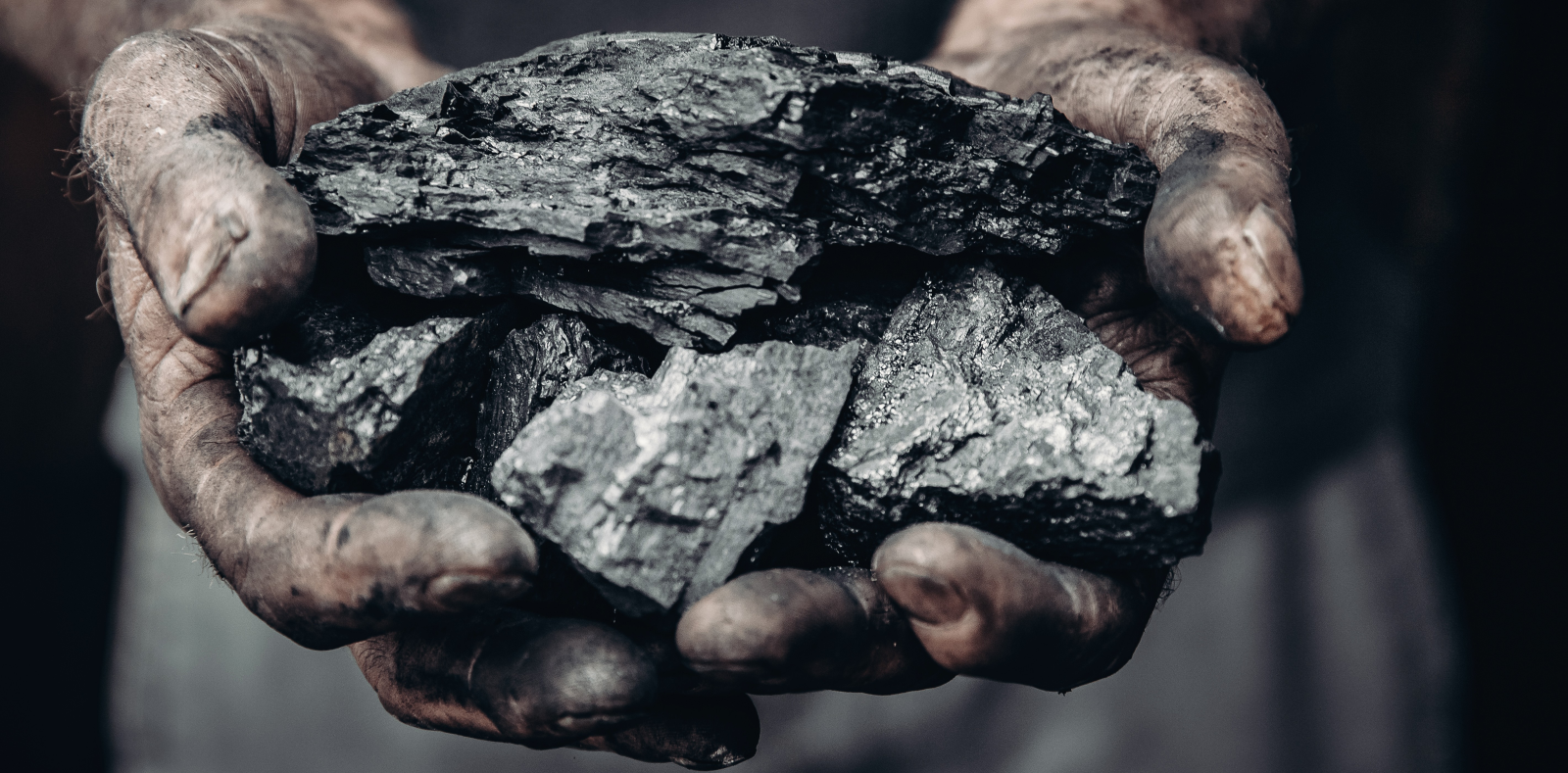
Over time, they discovered something remarkable about the black stone. If you took a piece and placed it in a fire, it would burn. Not like wood, with bright flames and crackling sounds, but with a steady, hot, long-lasting heat. The fire that had been trapped within was still there, waiting to be released.
“This is the spirit of the ancient earth fire,” the elders taught. “When we burn nikkin, we release a little of that spirit. We must do so with respect, with gratitude, with understanding of what it cost to contain it.”
The Awabakal developed careful rituals around the use of coal. They used it to heat their shelters through cold winters. They heated pieces until they were red-hot, then used them to burn out the centers of canoes, making the boats more buoyant and durable. They traded small pieces with neighboring groups, always with the warning: “This contains ancient fire. Use it wisely.”
But they also taught cautionary lessons. “If you take too much nikkin from the ground,” Old Wurumu’s great-granddaughter would tell her children, “you risk weakening what holds the darkness down. You risk letting it escape again.”
The mound at Kintirrabin became a sacred site. People would visit to remember the story, to leave offerings of thanks, to reinforce their commitment to balance and community. The area around it became known for its unique black soil, excellent for growing certain plants that thrived in the mineral-rich earth.
The Warning and the Wisdom For Today
As centuries turned to millennia, the story evolved but its core remained unchanged. It became part of the Awabakal Dreaming, one of the creation stories that explained the nature of their world. It taught several important lessons:
- The power of community – No single person could have contained the darkness. It required everyone working together.
- Transformation over destruction – They didn’t destroy what threatened them; they transformed it into something useful.
- Respect for deep forces – The earth contains powerful energies that must be respected, not just exploited.
- Intergenerational responsibility – The work took generations; the benefits and responsibilities would last forever.
- Balance – Containing the darkness didn’t mean eliminating darkness entirely; it meant finding the proper balance between light and dark, surface and depth.
The story also contained a warning that would echo down through time: “The darkness is not gone. It sleeps. It is contained. But it can be released if we are careless. When you see nikkin burning, remember that you are witnessing the ancient earth fire finding temporary freedom. Use that power wisely, for it comes with great responsibility.”
Today, when you walk along Redhead Bluff and see the layers of black coal visible in the cliffs, you are seeing the physical manifestation of this story. When you learn about the Awabakal people’s historical use of coal in their campfires and canoes, you are witnessing the practical application of ancient wisdom.