The Story Of Baiame – Dreamtime Aboriginal Creator Spirit
Acknowledgement of Country
Before we yarn about The Story Of Baiame, this proper deadly story, we gotta pay our respects. This story comes from Country that belongs to the Darkinjung, Awabakal, and Wonnarua mobs. We acknowledge these Traditional Custodians of the lands where this story lives – the Central Coast and Lake Macquarie region. We pay respects to Elders past, present and emerging, and recognise their continuing connection to Country, community and culture. This isn’t just some old tale – this is living lore that mob have carried for thousands of generations. When you’re on this Country, you’re walking where Dreaming tracks criss-cross like songlines, where every rock, river and tree has a story to tell.
Now, let me take you back – way back – to when the world was fresh and new, and Baiame (or Baiame as some mob call him) stepped down from the starry sky to shape the land we call home today.
The Dreamtime Story of Baiame
Part 1: The Stillness Before Creation
Imagine, if you can, a world so quiet you could hear your own heartbeat echoing in the emptiness. The air smelled clean and sharp – like ozone after a storm, but without the storm ever having come. The earth beneath was cool and dark, untouched by footprints or fire. This was the world before time, before life, before story.
Up in the Milky Way – that river of stars mob call the “Sky Camp” – Baiame watched. He wasn’t impatient, not our Creator Spirit. He felt that deep connection, that pull to Country even before it existed. His heart beat in time with a rhythm only he could hear – the rhythm of creation waiting to happen.
When he finally stepped down, it wasn’t with a crash or bang. Nah, it was gentle, like morning mist settling on the mountains. His feet touched the earth for the first time, and where they landed, starlight lingered in the soil. You could still feel that energy today if you know where to look – proper spiritual stuff, that.
Baiame looked around at the blank canvas of land. He didn’t see emptiness – he saw potential. He saw where mountains should rise proud and strong, where rivers should dance their way to the sea, where valleys should cradle life. A feeling swelled in his chest – not just love, but responsibility. This was his to shape, his to care for, his to bring to life.
Part 2: Shaping the Land – Mountains, Rivers, Valleys
Baiame started with the big stuff first. He ran his hands along the land, and where his fingers traced, mountains pushed up towards the sky. The Blue Mountains rose like a great wall, their sandstone faces catching the first rays of dawn light. You can still see his handiwork there – the layered rocks look like they’ve been stacked careful-like, which they were.
Then came the rivers. Oh, you should’ve heard it! The sound of rock splitting open like dry bark in summer, the gush of fresh water finding its path. Baiame carved out Dyarubbin – what settlers call the Hawkesbury River – with purpose. He knew this river would be lifeblood for mob, a highway for canoes, a source of tucker and ceremony.
But he saved special attention for our part of Country. The Central Coast called to him with its promise of saltwater meeting freshwater. Baiame shaped the Brisbane Water system with particular care, making sure the tides would flow just right, creating those perfect oyster beds and fish habitats. The Narara Valley got its gentle slopes, perfect for camps and gatherings.
Then he turned his attention to what would become Lake Macquarie – Awaba to the local mob. This wasn’t just any waterhole, this. Baiame dreamed big – the largest saltwater lake in the whole Southern Hemisphere! He scooped out the basin with both hands, making sure it connected properly to the ocean through that narrow channel. He lined the shores with sandy beaches and rocky outcrops, knowing mob would need both for different purposes.
The sensory experience was overwhelming. The smell of freshly exposed earth – that rich, dark scent of potential. The sound of water finding its voice after millennia of silence. The sight of colours emerging – the deep blue of the new lake, the green of first plants, the grey of stone not yet weathered. Baayama worked with all his senses engaged, making sure every part of Country felt right.
Part 3: Breathing Life into Country
With the land shaped proper, Baiamegot to the really good bit – filling it with life. And he started with the waterways, knowing they’d be the heart of everything.
First came the dolphins. Baayami breathed into the waters of Brisbane Water and the ocean beyond, and dolphins leapt into existence. Their sleek bodies sliced through the waves, their clicks and whistles the first music in the new world. You can see them today at the Bulgandry site – engraved right there in stone alongside Baayama himself, forever connected to their Creator.
Then the fish – mullet, bream, flathead – all the tucker fish mob would need. Biaime made sure there were plenty, but he built in the lore too: take only what you need, let the little ones go, respect the cycles. The fish swam in schools that shimmered like living rainbows under the water.
On land, Baayami created the wallabies and kangaroos. He gave them strong legs for bounding across the landscape and pouches for carrying their young safe. The first thump of a kangaroo’s tail on the ground was like a heartbeat for the new land. He made sure there were different kinds for different Country – swamp wallabies for the wet areas, rock wallabies for the cliffs, big red kangaroos for the open spaces.
The birds came next, each with their own purpose. The kookaburra got its laugh to signal dawn and dusk. The wedge-tailed eagle got its keen eyes to watch over everything. The lorikeets got their rainbow feathers to brighten the bush.
Plants weren’t an afterthought either. Baiame breathed life into the eucalypts, giving them that special scent that says “Australia” even today. The banksias with their weird flowers that hold nectar for honeyeaters. The mangroves to protect the shorelines and provide nurseries for fish.
Baiame felt proper proud watching his creations find their place. There was this fatherly love swelling in him – not possessive, but protective. He wanted this world to thrive long after he’d returned to the Sky Camp.
Part 4: The Sacred Laws – Kinship and Lore
When the first people appeared – not created by Byamee, but emerging from the land itself, from the very Country he’d shaped – he knew his work wasn’t finished. A beautiful landscape needs people who know how to care for it proper.
So Baiame sat down with the mob and shared the sacred laws. This wasn’t some quick chat – this was proper teaching, deep learning that would last forever.
First came kinship – how everyone and everything is connected. Not just people to people, but people to animals, to plants, to rocks, to water. Byamee explained the moieties and totems – why some mob are kangaroo people, others are dolphin people, others are honey grevillea people. This wasn’t random; it meant responsibility. If your totem is the black swan, you look after the swans and their habitats. Simple but deep, you know?
Then came the survival lore – the practical stuff. How to track a kangaroo by the faintest disturbance in the grass. How to find water by following certain birds. Which plants are tucker and which are medicine. How to make tools from stone and fibre. How to build gunyahs that keep you cool in summer and warm in winter.
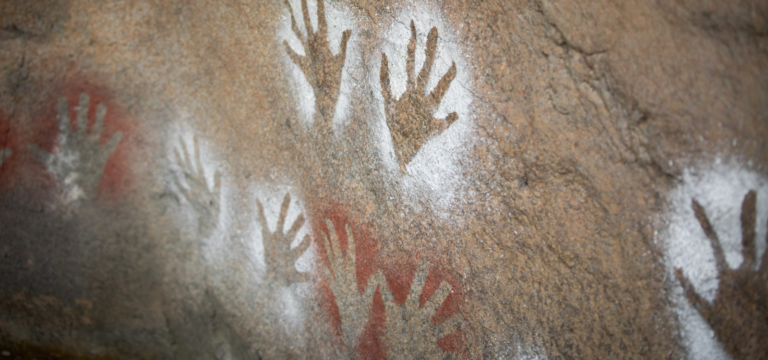
But most important was the ceremony and story. Baiame taught mob how to dance the stories into being, how to sing the land alive. He showed them how to create the rock engravings – like the ones at Bulgandry – so the stories would never be forgotten. He explained that these weren’t just pictures; they were maps, law books, history records all in one.
The trust relationship that built up was something special. The people looked at Baiame not as some distant god, but as a teacher, a guide, a family member. And Baiame looked at the people with that same fatherly pride, knowing they’d care for Country proper.
Part 5: The Return – Mt. Yengo and Beyond
All good things come to an end, even a Creator Spirit’s time on earth. Baiame knew when his work was done – when the land was shaped, the life was thriving, and the people knew the lore.
He chose his departure point careful-like: Mount Yengo, that flat-topped mountain out near Wollombi. Why flat-topped? Because when Baiame stepped up back to the Sky Camp, he pushed off so hard he flattened the top! You can see it today – a proper flat summit where other mountains are pointy.
But before he left, there were final teachings. Baiame gathered the people one last time and reminded them: “This Country is yours to care for. The stories are yours to carry. The law is yours to live by. I’ll be watching from the Sky Camp, but you mob are the caretakers now.”
He promised he’d always be present – in the morning star that rises before dawn, in the rock formations that hold his shape, in the feeling of connection when mob do ceremony proper.
Then, with one last look at the beautiful world he’d helped shape – the sparkling waters of Awaba (Lake Macquarie), the winding rivers, the lush forests – Baiame stepped up. Not with sadness, but with satisfaction. He’d done his job proper.
Part 6: The Sacred Sites – Bulgandry Art Site
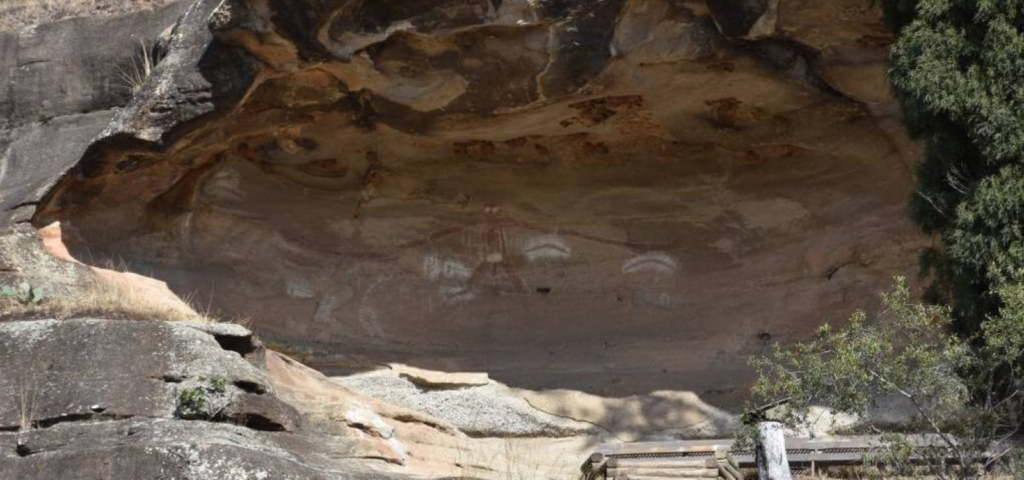
You wanna feel this story? Really feel it in your bones? You gotta visit Bulgandry Aboriginal Art Site in Brisbane Water National Park. This isn’t just some tourist spot – this is sacred Country where the story lives in the stone.
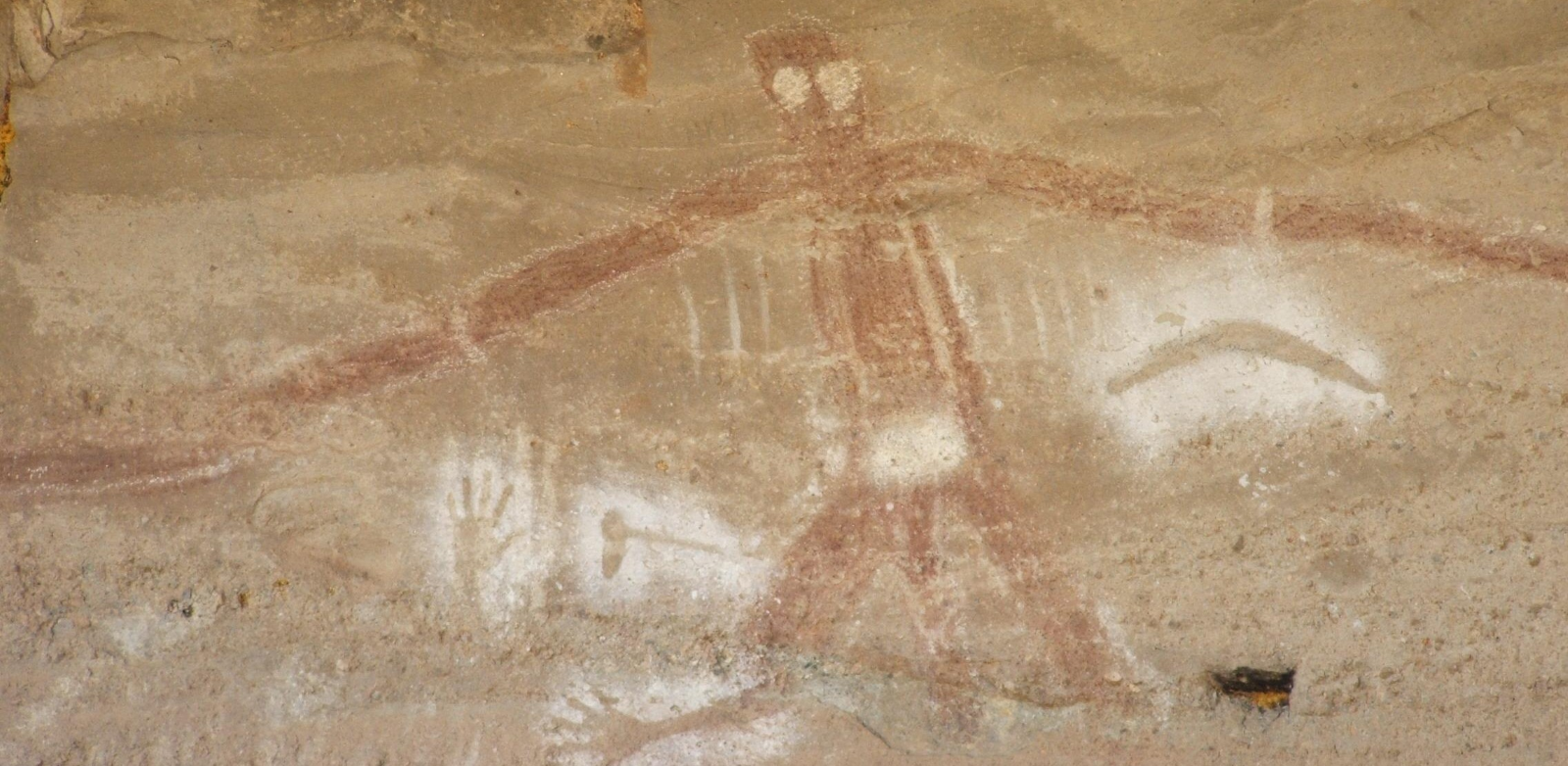
When you walk up the path (respectful-like, quiet), you feel the change. The air gets stiller. The bird calls seem to hush. Then you see it – Baiame himself, engraved into a sandstone platform. And he’s not small, our Creator Spirit! The figure is large, visually striking, with arms outstretched like he’s still embracing the world he shaped.
You gotta look close. See the details? The lines aren’t just random scratches – they tell the story. Surrounding Baiame are the creatures he created: dolphins arcing through imagined waves, fish swimming in schools, wallabies frozen mid-hop. Some engravings show tools, others show ceremonial objects. It’s all there – the whole creation story in pictures.
Standing there, you can almost hear the tap-tap-tap of the stone tools that made these engravings generations ago. You can feel the concentration of the artists, the respect in their work. This wasn’t art for art’s sake – this was law-keeping, story-preserving, culture-maintaining.
The emotions hit you proper when you’re there. There’s awe, sure – at the skill, at the age of the engravings. But there’s also connection – this feeling that you’re part of something bigger, something older, something deeper than your own little life. That’s Baiame’s gift that keeps giving – connection to Country.
Connection to Lake Macquarie & Central Coast
Lake Macquarie (Awaba) – A Testament to Baiames Vision
Lake Macquarie, known to the Traditional Custodians as Awaba, stands as a remarkable testament to Baiame’s creative vision and profound understanding of ecological balance. This vast body of water—the largest saltwater lake in the Southern Hemisphere—was not shaped by random geological processes in the Dreamtime narrative, but was intentionally designed by Baiame to serve specific purposes for the people who would inhabit its shores.
The lake’s distinctive geography, with its almost-circular form and narrow connection to the ocean through Swansea Channel, reflects a deliberate design philosophy. Baiameunderstood that this configuration would create sheltered waters ideal for safe navigation by traditional bark canoes, even during periods of rough ocean conditions. The mixing of saltwater and freshwater environments established perfect conditions for diverse marine life, ensuring sustainable food sources for generations. The varied shoreline—alternating between sandy beaches, rocky outcrops, and sheltered bays—provided for different human needs, from campsites and ceremonial grounds to fishing locations and gathering places.
Today, when visitors gaze across Lake Macquarie from vantage points like Belmont, Wangi Wangi, or Speers Point, they are witnessing a landscape that has been cared for according to Baiame’s teachings for thousands of years. Archaeological evidence around the lake’s perimeter—including shell middens, stone tool scatters, grinding grooves, and scarred trees—speaks to continuous human occupation and cultural practice. These sites represent not just historical artifacts but living connections to the sustainable practices Baiame imparted to the first peoples.
The Central Coast – A Living Cultural Landscape
The entire Central Coast region functions as an extensive cultural landscape where BBaiame’s story is inscribed into the very topography. From the Hawkesbury River (Dyarubbin) system he carved to the intricate waterways of Brisbane Water, from the protective mountains he raised to the fertile valleys he formed, this region represents a comprehensive expression of creative vision.
Brisbane Water National Park, home to the significant Bulgandry Aboriginal Art Site, serves as a primary cultural repository where Baiame’s image and associated symbols have been preserved in sandstone for millennia. However, this site represents just one node in a complex network of culturally significant locations throughout the region. Mount Yengo, with its characteristically flattened summit marking Baiame’s departure point, stands as a permanent geographical monument to this foundational narrative.
The coastline itself tells stories through its formation. The Five Lands Walk along the Central Coast is not merely a scenic coastal trail but a journey through layered cultural narratives. Each of the five coastal areas—MacMasters Beach, Copacabana, Avoca Beach, North Avoca, and Terrigal—has its own specific Dreaming associations and cultural significance within the broader Baiame narrative. This walk allows modern visitors to experience the landscape as generations of Aboriginal people have experienced it—as a living storybook written in landforms, vegetation patterns, and seasonal changes.
Bulgandry Art Site – Cultural Heritage in Stone
The Bulgandry Aboriginal Art Site represents one of the most accessible and well-preserved connections to the Baiame narrative in the Central Coast region. Visiting this site requires approaching with appropriate respect and understanding—it functions simultaneously as an outdoor museum, a sacred space, and a continuing educational resource.
The site’s central feature—the large anthropomorphic figure of Baiame with outstretched arms—dominates the sandstone platform, surrounded by engraved representations of the creatures he brought into being. The dolphins, fish, and wallabies depicted around the central figure are not merely decorative elements but essential components of the creation narrative, illustrating the interconnectedness of all life that Baiame established.
When compared to other significant Aboriginal engraving sites like Grotto Point in Sydney Harbour National Park, Bulgandry reveals both regional similarities and local particularities. Like Grotto Point, Bulgandry demonstrates the sophisticated symbolic language and technical skill of Aboriginal rock engraving traditions. However, Bulgandry’s specific iconography connects it directly to the Baiame narrative and the ecological systems of the Brisbane Water area, making it uniquely valuable for understanding local cultural traditions.
Cultural Significance And Modern Connections
Living Cultural Tradition
The story of Baiame represents far more than an ancient mythological account; it constitutes a living cultural tradition that continues to inform contemporary Aboriginal identity, environmental stewardship, and community values. For the Traditional Custodians of the Central Coast and Lake Macquarie regions—the Darkinjung, Awabakal, and Wonnarua peoples—Baiame’s narrative provides foundational principles for understanding human relationships with Country.
The laws and knowledge systems that Baiame imparted—covering sustainable resource management, ecological balance, kinship structures, and ceremonial practice—remain profoundly relevant in the modern context. In an era of climate change, biodiversity loss, and environmental challenges, Baiame’s teachings about taking only what is needed, maintaining balance in natural systems, and recognizing the interconnectedness of all life offer valuable insights for contemporary environmental management.
This continuity between ancient wisdom and modern application demonstrates the sophistication of Aboriginal knowledge systems. The principles embedded in the Baiame narrative anticipate contemporary concepts of sustainable development, ecosystem-based management, and intergenerational equity. Traditional practices informed by this narrative—such as cultural burning, selective harvesting, and seasonal movement patterns—represent time-tested approaches to living sustainably within specific ecological contexts.
Responsible Cultural Tourism
Increasing interest in Aboriginal cultural heritage among visitors to the Central Coast and Lake Macquarie regions presents both opportunities and responsibilities. Cultural tourism, when conducted respectfully and collaboratively, can support cultural maintenance, provide economic benefits to Aboriginal communities, and foster greater public understanding of Australia’s First Nations heritage.
Visiting culturally significant sites like Bulgandry requires adherence to established protocols: remaining on designated pathways, refraining from touching rock art (as natural oils from human skin can accelerate deterioration), respecting any access restrictions, and approaching these places with appropriate reverence. Most importantly, visitors should seek opportunities to learn directly from Traditional Owners and accredited Aboriginal guides who can provide authentic cultural context and interpretation.
Supporting Aboriginal-owned and operated cultural enterprises—including guided tours, art centers, cultural workshops, and bush food experiences—represents one of the most meaningful ways for visitors to engage with living culture. These interactions create opportunities for cross-cultural learning while ensuring that Aboriginal people maintain control over how their cultural heritage is presented and interpreted. First Nations cultural experiences.
Contemporary Relevance and Application
The Baiame narrative extends beyond cultural and tourism contexts to inform broader societal conversations about land management, conservation, and reconciliation. The narrative’s emphasis on custodianship rather than ownership, on reciprocal relationships with Country, and on intergenerational responsibility offers alternative frameworks for conceptualizing human-environment relationships.
In practical terms, the Baiamestory and associated cultural knowledge are increasingly being incorporated into contemporary land management practices. Collaborative projects between Traditional Owners, government agencies, and research institutions are applying traditional ecological knowledge to challenges such as threatened species recovery, waterway rehabilitation, and fire management. These partnerships recognize that Aboriginal knowledge systems, grounded in deep temporal understanding of local ecosystems, can complement scientific approaches to environmental management.
For all Australians, engaging with the Baiame narrative provides an opportunity to develop deeper connections to place and to recognize the rich cultural dimensions of familiar landscapes. Understanding the Baiame story transforms these experiences from mere recreation to meaningful engagement with continuing cultural traditions.
The challenge for contemporary society lies in finding appropriate ways to honor, learn from, and support the maintenance of these cultural traditions while ensuring that Aboriginal people retain authority over their cultural heritage. The Baiame narrative, with its themes of creation, connection, and custodianship, offers a powerful starting point for these important conversations and for building more respectful relationships between all who live in and visit this remarkable region.