Dharawal Whale Dreaming Story – A Kinship Tale
This is one of the most significant Dreamtime stories of the Dharawal people, explaining how they came to the Illawarra region of New South Wales and why whales spout water as they swim along the coast. It’s a story about survival, cleverness, greed, and the eternal search that continues to this day.
The Old Country: Ngarawan
Long ago, in the Dreamtime, the Dharawal people lived in a distant land across the ocean called Ngarawan. This was their original home, far to the east.
But trouble came to Ngarawan. A terrible drought gripped the land. The creeks and rivers dried to dust. Plant life withered and died without water. There were no fruits, no vegetables, no food to gather. The hunting grounds failed.
The people knew they had to leave. They needed to find a new place to live—somewhere with fresh water, abundant food, and good hunting grounds. But between them and survival lay a vast, dangerous ocean.
The Clever Plan: Kooala and Junagen
Two smaller men—Kooala and Junagen (also called Gunaagan or Ghoon a ghaan, meaning starfish)—grew frustrated watching their people suffer while Burri Burri’s canoe sat unused.
They hatched a plan.
Junagen was Burri Burri’s friend, one of the few the giant man trusted. Kooala said to Junagen: “Why don’t you put Burri Burri to sleep? While he’s sleeping, I’ll get everyone aboard the canoe and row us all to a better place to live.”
The next morning, Junagen approached Burri Burri with a friendly smile.
“Burri Burri, you have so many head lice. Come here and let me catch them for you. I’ll go through your hair and get all the mula out.”
Burri Burri was annoyed by the itching in his scalp. The offer was tempting. He pulled his great canoe up to the shallow waters, tied it securely to a large rock nearby, and sat down. He let Junagen search through his thick hair, scratching and picking.
As Junagen worked, scratching especially near Burri Burri’s ears so he couldn’t hear properly, he signaled to the others. Quietly, carefully, the people began climbing into the enormous canoe.
The Deception
Burri Burri kept his eyes closed, relaxing under Junagen’s grooming. But every now and then, suspicion flickered in his mind.
“Junagen, is my barangga okay? Is it still there?”
Junagen was ready. He’d placed two large sticks right next to him. He picked up one stick and tapped it against the other—tap, tap, tap.
“Yes, can you hear it? I’m tapping on it right now. It’s still here, right beside us.”
Satisfied, Burri Burri would relax again.
Tap, tap, tap. The sound continued reassuringly.
Meanwhile, Kooala was rowing. Silently, steadily, he paddled the massive canoe away from shore, filled with all the people seeking a new life.
The Betrayal and the Fight
Then, suddenly, Burri Burri’s eyes snapped open.
Something felt wrong. He looked out to sea—and there, in the distance, almost out of sight, was his precious canoe being rowed away! He could see Kooala and all the people aboard.
Rage exploded through him. Burri Burri had a fierce temper, and he felt the double sting of theft and betrayal—betrayed by his own friend!
He turned on Junagen.
They fought on the rocks. Despite being smaller, Junagen grabbed one of the sticks he’d been using and stabbed it into the top of Burri Burri’s head, piercing a hole.
But Burri Burri was too big, too strong, too angry. He grabbed Junagen and, with all his enormous strength, threw him down onto the rocks. Junagen’s body splattered against the stone.
The First Transformation: Junagen Becomes Starfish
Junagen’s broken body rolled off the rocks and drifted down through the water, down toward the ocean floor. As he sank, something miraculous happened.
His splattered pieces came back together, but not as they were before. His body flattened and spread. Arms extended in all directions.
Junagen transformed into the first starfish (gunaagan), and to this day, starfish rest on the ocean floor in the shallow waters, descendants of the one who tried to help his people escape.
The Chase: Burri Burri Pursues His Canoe
Blood poured from the hole Junagen had made in the top of Burri Burri’s head. But the giant man didn’t stop. Consumed by rage and determination, he jumped into the ocean and began swimming after his stolen canoe.
The stick dislodged, and blood streamed from the wound. Still he swam, powerful and relentless.
The chase lasted for days. Days and days across the endless ocean.
The Second Transformation: Kooala Becomes Koala
Back in the canoe, the people could see Burri Burri coming. He was gaining on them.
Kooala panicked and rowed faster. “Look at my strong arms!” he called out. “I’ll get us there!”
He rowed and rowed, faster and faster, harder and harder.
As he rowed, something strange began to happen to his body. His arms grew bigger and stronger from the constant rowing. Grey fur began to sprout all over his body. His ears grew large and round.
Kooala was transforming, becoming the first koala (garilwa)—an animal with powerful arms perfect for gripping and climbing.
The Third Transformation: Burri Burri Becomes Whale
Meanwhile, behind them, Burri Burri kept swimming. He swam so fast, with such power and fury, that his body also began to change.
His legs fused together, forming a massive tail. Great fins emerged from his sides. His body grew larger, more streamlined for the water.
The blood streaming from the hole in his head began to thin, mixing with seawater. Soon, instead of blood, clear seawater spouted from the wound.
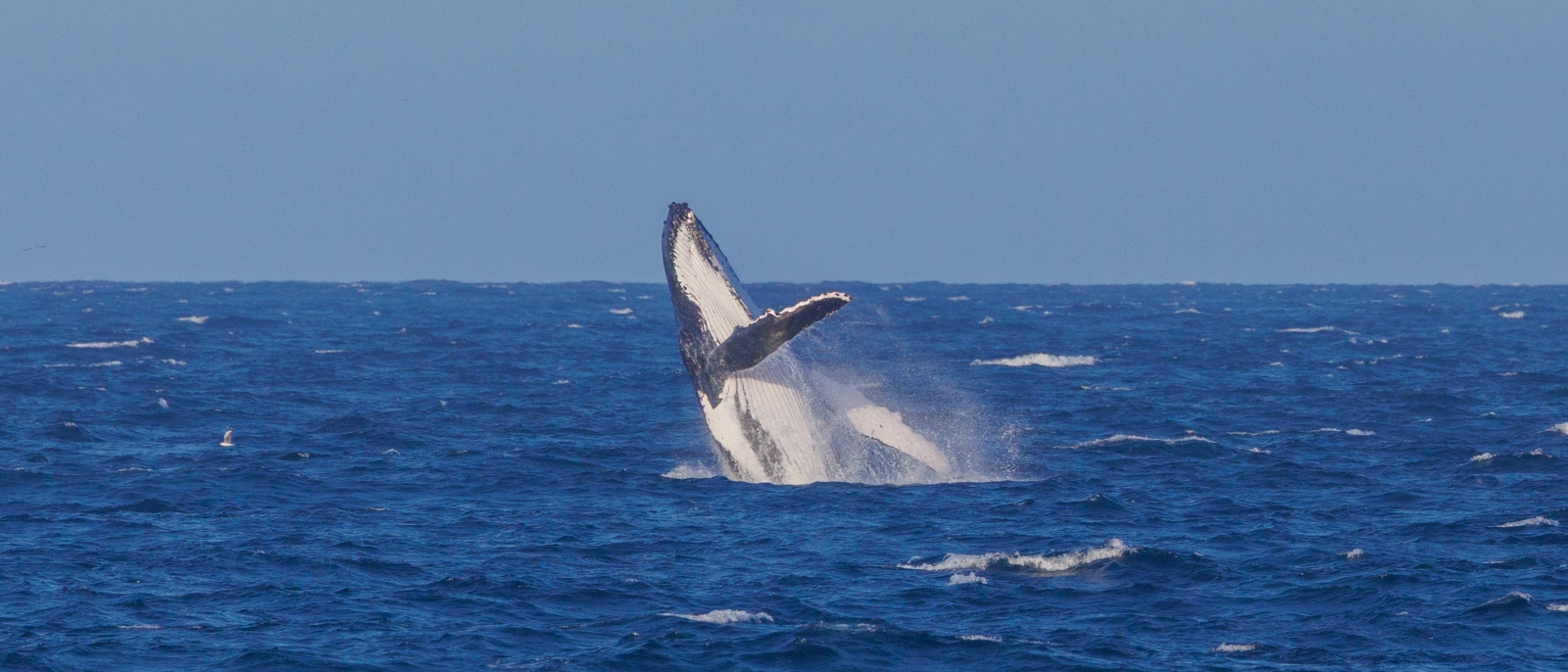
Burri Burri had transformed into the first whale (burri burri)—a giant creature of the ocean, powerful beyond measure, still chasing his stolen canoe.
This is why we call whales “Burri Burri” to this day. And this is why humpback whales spout water from the blowholes on top of their heads—water still flows from the wound that Junagen made in that long-ago fight on the rocks.
The Final Transformations
After days of desperate rowing, with the whale-man close behind, Kooala finally saw something ahead.
“Land! I can see land!”
Hope surged through the exhausted people.
Also aboard the canoe was Ghaloo (also called Galu or Guradhawak), a man who loved to dance. As they approached land, Ghaloo became so excited he started dancing right there in the canoe.
He danced and danced, and as he did, feathers sprouted from his body. His face elongated into a beak. His legs grew long and elegant.
In his excitement, dancing with his new long legs, he stamped holes in the bottom of the canoe, and water began pouring in!
Ghaloo had become the first crane (or brolga)—a dancing bird who, to this day, performs elaborate dances when excited.
Arrival and the Hiding of the Canoe
The canoe reached the shore just as water was filling it. Everyone jumped out onto the new land—this place that would become Dharawal Country.
Burri Burri, now fully transformed into a whale, was right behind them.
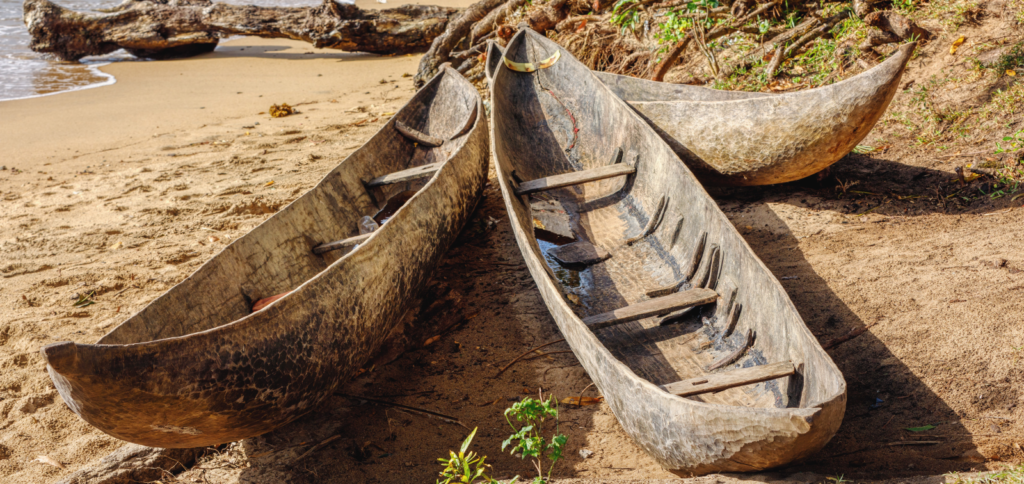
Thinking quickly, the people—now animals—dragged the massive canoe up onto the shore and flipped it upside down so Burri Burri wouldn’t recognize it.
Kooala, exhausted from days of rowing, climbed up into a nearby tree and fell asleep, gripping the branches with his strong arms. And that’s where you’ll find koalas to this day—sleeping in eucalyptus trees, hanging on with those powerful arms that once rowed a nation to safety.
The Canoe Becomes an Island
The upturned canoe was pushed out into the water at the entrance of what is now Lake Illawarra. Over time, with the saltwater, the wind, and the sand, that massive canoe turned to stone.
It became Gangmangang, also known as Windang Island, which still sits at the entrance to Lake Illawarra. This island is the petrified remains of Burri Burri’s great canoe—hidden in plain sight, where the whale can never recognize it.
The Eternal Search
Burri Burri, in his whale form, never gave up looking for his canoe.
To this very day, if you stand on the coast of New South Wales—from Sydney Harbour down to the Shoalhaven—you can see Burri Burri and his descendants swimming up and down the coastline, spouting water from the hole in their heads, still searching for the stolen canoe.
The Dharawal and Yuin people say you can tell where Burri Burri has been by looking at the islands in harbors and bays along the coast. When Burri Burri thought he’d found his canoe, he would swim around it, creating a deeper channel—only to realize it wasn’t his barangga after all, and he’d continue on, spouting water, forever searching.
Islands in Sydney Harbour, like Clarke Island, and bays at Botany Bay and Shoalhaven—all were shaped by Burri Burri’s eternal quest.
The Creations
This story explains the creation of several animals and their characteristics:
- Junagen/Gunaagan became the starfish, who remains on the ocean floor in shallow waters
- Kooala/Garilwa became the koala, who sleeps in trees, gripping branches with his strong arms
- Ghaloo/Galu/Guradhawak became the crane (brolga), who dances when excited
- Burri Burri became the whale, who spouts water and searches the coastline eternally
The Deeper Meaning
This Dreamtime story is far more than just an origin tale. For the Dharawal people, it explains:
- How they came to their Country: Their ancestors traveled across the ocean from Ngarawan to escape drought and find a better home
- Why whales are sacred: Whales are viewed as Elders—beings who once walked the land and then went to sea to protect the fish, food, and medicine of the ocean (the Gadhu)
- The connection to place: Windang Island is not just geography—it’s the physical manifestation of their creation story
- The importance of sharing: Burri Burri’s greed led to his transformation and eternal punishment
- The power of cooperation: Kooala, Junagen, Ghaloo, and the people worked together to survive
- Why certain animals have specific traits: Each animal’s characteristics reflect their role in the great journey
The story is taught to children to help them understand their relationship to Country, to animals, to the sea, and to the values of community and sharing.
Cultural Significance Today
The Burri Burri story remains deeply significant to Dharawal and Yuin people:
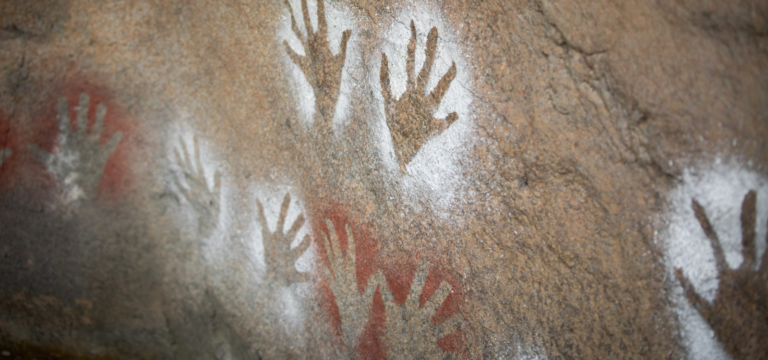
- Rock engravings: Large whale engravings (some over 10 meters long) were carved by Dharawal ancestors at sites like La Perouse, marking this as a teaching and spiritual site
- Whale watching: When humpback whales migrate along the Australian coast each year, Dharawal people see their ancestor still searching
- Public art: Recent installations, like the bronze Burri Burri sculpture at Reddall Reserve near Windang Island, honor the story and teach it to new generations
- Connection to Country: The story binds people to specific places—Windang Island, Lake Illawarra, the migration routes along the coast
The whale is a significant totem animal for Dharawal people, representing not just an animal but an ancestor, a teacher, and a reminder of where they came from and the values they carry.
Respect for the Story
This story has been told by Dharawal Elders and knowledge holders for thousands of years. Versions have been shared by:
- Ray Ingrey (Deputy Chairperson of the La Perouse Local Aboriginal Land Council)
- Dr. Jodi Edwards (Yuin educator and knowledge holder)
- Theresa Ardler (Gweagal Dharawal artist and educator)
When we share this story, we honor the Dharawal people’s generosity in allowing these teachings to be known more widely, helping all Australians understand the deep spiritual and cultural connections that First Nations people have to Country.
Every year, when the whales return to Lake Macquarie and Central Coast of New South Wales on their migration, they carry with them the memory of Burri Burri—still searching, still spouting water from the wound on his head, reminding us of the power of stories that connect land, sea, animals, and people across tens of thousands of years.
Note: This retelling is based on traditional Dharawal sources and should be shared with respect for its cultural significance. The story belongs to the Dharawal people and represents their deep connection to the Illawarra region and the broader NSW coast.